

Ashwagandha and Cortisol: How Chronic Stress Is Making Your Menopause Symptoms Worse
There’s a reason so many women feel like menopause hit them like a freight train. It’s rarely just one thing. Hot flashes, poor sleep, anxiety, weight gain, brain fog — these symptoms don’t exist in isolation. They’re connected by a common thread that doesn’t get nearly enough attention: cortisol, your body’s primary stress hormone. And during menopause, cortisol can run completely off the rails.
The good news is that one of the most researched plants in traditional medicine has a compelling body of modern evidence behind it for bringing cortisol back under control. That plant is ashwagandha.
The Cortisol and Menopause Connection
To understand why cortisol matters so much during menopause, it helps to understand the relationship between your stress response system and your reproductive hormones.
Estrogen and progesterone help regulate the HPA axis, the hypothalamic-pituitary-adrenal system that controls cortisol production. As these hormones decline during perimenopause, the HPA axis becomes less regulated, meaning cortisol levels can spike higher and stay elevated for longer than they should. At the same time, the adrenal glands take on increased importance during menopause as a secondary source of sex hormones. When those adrenal glands are already exhausted from chronic stress, this backup system is compromised before it even gets a chance to help.
The result is a vicious cycle. Declining hormones dysregulate cortisol. Elevated cortisol worsens hot flashes, disrupts sleep, drives anxiety, promotes abdominal weight gain and accelerates bone loss. Poor sleep raises cortisol further. And on it goes.
What Is Ashwagandha?
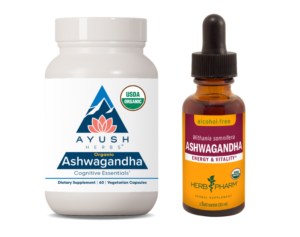
Ashwagandha (Withania somnifera) is a small shrub native to India, North Africa, and the Mediterranean. It has been a cornerstone of Ayurvedic medicine for over 3,000 years, traditionally used to build resilience, restore energy, and calm the nervous system.
It belongs to a class of plants called adaptogens, a term used to describe herbs that help the body adapt to physical and psychological stress by modulating the stress response rather than suppressing or stimulating it outright. What makes ashwagandha stand out among adaptogens is the quality and volume of clinical research supporting its effects, particularly on cortisol.
What the Research Shows
Ashwagandha is one of the most studied botanicals in the world, and its effects on cortisol and stress are among its most well-documented properties.
A landmark double-blind, randomised controlled trial published in the Indian Journal of Psychological Medicine found that 300mg of ashwagandha root extract twice daily significantly reduced perceived stress, anxiety and cortisol levels compared to placebo over 60 days. Cortisol reductions in the treatment group were substantial and measurable in serum testing.
A 2019 study published in Medicine found that 240mg of a standardised ashwagandha extract daily reduced cortisol levels by over 22% compared to placebo, alongside significant improvements in sleep quality and general wellbeing.
Critically for menopausal women, a 2021 randomised controlled trial published in the Journal of Ethnopharmacology studied ashwagandha specifically in perimenopausal women and found significant improvements in hot flashes, sleep quality, anxiety, and overall menopause symptom scores compared to placebo. This is one of the few adaptogen studies conducted directly in this population, and the results are encouraging.
Beyond Cortisol: Other Benefits Relevant to Menopause
Ashwagandha’s benefits extend beyond stress reduction in ways that are particularly relevant to the menopausal transition.
Thyroid support. Menopause and thyroid dysfunction frequently overlap, with many women developing subclinical hypothyroidism during this period. Ashwagandha has been shown in clinical studies to support thyroid hormone levels, particularly T3 and T4, which may be relevant for women experiencing fatigue and weight changes.
Cognitive function. Brain fog is one of the most distressing and underacknowledged menopause symptoms. A 2017 study in the Journal of Dietary Supplements found that ashwagandha root extract significantly improved memory, attention and information processing speed, all domains commonly affected during the menopausal transition.
Muscle strength and recovery. As estrogen declines, women lose muscle mass more rapidly. Ashwagandha has a well-established evidence base for supporting muscle strength and recovery, which becomes increasingly important for long-term metabolic and bone health after menopause.
How to Use It
The most studied and standardised form of ashwagandha is KSM-66, a full-spectrum root extract that has been used in the majority of high-quality clinical trials. When choosing a supplement, look for this designation on the label as a mark of quality and research backing.
Typical therapeutic doses used in research range from 300 to 600mg daily, taken with food. Some women find it works best taken in the evening, given its calming properties, though it can be taken at any time of day. Effects tend to build over four to eight weeks of consistent use rather than being immediately noticeable, so patience is important.
Ashwagandha is generally well-tolerated. It should be avoided during pregnancy and used with caution in women with autoimmune conditions or thyroid disorders already being managed with medication, as it may amplify effects. As always, discuss with your healthcare provider if you are on any medications, particularly thyroid medication, immunosuppressants, or sedatives.
The Bottom Line
Chronic stress is not just a lifestyle inconvenience during menopause. It is a physiological force that actively worsens symptoms and undermines the body’s ability to adapt to hormonal change. Addressing cortisol is not optional for many women — it is central to feeling better.
Ashwagandha offers something relatively rare in the world of natural supplements: genuine, replicated clinical evidence behind a meaningful biological mechanism. It won’t resolve menopause on its own, but as part of a thoughtful, individualised approach to symptom management, it is one of the most powerful tools in the natural medicine toolkit.
Available at my Fullscript account. Discounted everyday. Sign up for free.