

For Men— Is Your Testosterone Tanking? Here’s What to Do About It
Testosterone isn’t just about sex drive. It’s the hormone behind your energy, focus, muscle, mood, and motivation. And for millions of men, it’s quietly declining years — sometimes decades — before it should.
Here’s what to watch for, what to test, and how to fight back naturally.
Signs Your T Might Be Low
If several of these sound familiar, it’s time to pay attention:
- Constant fatigue that sleep doesn’t fix
- Brain fog, low motivation, or creeping depression
- Belly fat that won’t budge despite effort
- Low libido or erectile issues
- Difficulty building or holding onto muscle
- Irritability, anxiety, or feeling emotionally flat
- Poor sleep quality or waking unrefreshed
Tests Worth Asking Your Doctor For
Don’t settle for just a basic testosterone number. Ask for a full hormonal panel:
- Total & Free Testosterone — Free T is what actually matters
- SHBG — high levels bind up your testosterone, leaving less active
- Estradiol (E2) — elevated estrogen suppresses T and causes symptoms
- LH & FSH — reveals whether the problem originates in the brain or testes
- DHEA-S — adrenal precursor to testosterone
- Cortisol (AM) — chronic stress is a silent testosterone killer
- Thyroid panel (TSH, fT3, fT4) — thyroid issues mimic low-T exactly
- Vitamin D (25-OH) — functions like a hormone; low levels tank testosterone
- Fasting insulin & glucose — insulin resistance is a major driver of low T
Test in the morning (7–10 AM), fasted. Levels are highest then.
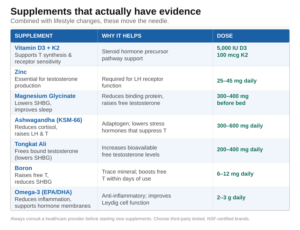
The Lifestyle Stuff You Can’t Skip
No supplement stack will save you if these aren’t dialed in:
- Sleep 7–9 hours. Most testosterone is made during deep sleep. Full stop.
- Lift heavy. Compound movements (squats, deadlifts) are among the most powerful natural T-boosters.
- Eat fat. Testosterone is made from cholesterol. Low-fat diets suppress it.
- Manage stress. Cortisol and testosterone compete. One goes up, the other goes down.
- Cut plastics. BPA and phthalates act as estrogens in the body. Glass and stainless steel are your friends.
When to Consider TRT
If labs confirm low testosterone and lifestyle changes aren’t enough, Testosterone Replacement Therapy is a legitimate, well-studied option. Work with a knowledgeable provider, ideally in functional or men’s health medicine, who will monitor your full panel (not just T levels) and tailor a protocol to you.
TRT isn’t a shortcut. It’s a tool. Used correctly, it can be life-changing.
In health,
Bob Wood, RPh
|
|

|