

Why testosterone matters for your energy, mood, and more.
Testosterone Isn’t Just a “Men’s Hormone”
In our last issue, we talked about natural progesterone and the role it plays in women’s health, especially during perimenopause and menopause. This time, I want to turn to a hormone that gets even less airtime in women’s health conversations: testosterone.
Yes, women make testosterone. It’s produced in the ovaries and adrenal glands, and while women have much lower levels than men, it’s still essential. Testosterone contributes to energy, mood stability, cognitive sharpness, muscle and bone strength, and sexual desire. When levels drop, the effects can be subtle at first, then start to add up.
Why Testosterone Declines
Like estrogen and progesterone, testosterone production naturally declines with age. Levels often start dropping in a woman’s 30s and continue through perimenopause and menopause. Other factors can accelerate the decline too, including chronic stress, certain medications (particularly oral contraceptives, which can suppress natural testosterone production), and conditions affecting the ovaries or adrenal glands.
What Low Testosterone Can Look Like
Because testosterone touches so many systems, low levels can show up in a variety of ways:
- Persistent fatigue that doesn’t improve with rest
- Low mood, reduced motivation, or a general sense of flatness
- Difficulty building or maintaining muscle
- Brain fog or trouble concentrating
- Decreased libido or diminished sexual response
- Thinning hair or changes in skin
Many women experiencing these symptoms are told their labs look “normal,” largely because testosterone isn’t routinely tested or because reference ranges used in conventional labs are broad and not always reflective of what’s optimal for an individual woman.
Beyond the Symptom List: Bone and Energy
Two effects of low testosterone deserve a closer look because they’re easy to miss. The first is bone health. Testosterone works alongside estrogen to support bone density, and women with low levels over time may face a higher risk of bone loss, something that often doesn’t get flagged until a bone density scan shows it. The second is the energy and motivation piece. This isn’t just feeling tired, it’s often described as a flatness, a lack of drive to do things that used to feel worthwhile. That distinction matters, because it points toward hormones rather than simply needing more sleep.
Testing and Options
If you suspect low testosterone may be part of your picture, a saliva or blood panel that includes free and total testosterone (along with DHEA-S, since it’s a precursor) can offer useful information. When you’re scheduling testing, it’s worth specifically asking for free testosterone, total testosterone, and DHEA-S to be included, since these aren’t always part of a standard panel. As always, testing should be interpreted alongside your symptoms and your full hormone picture rather than in isolation.
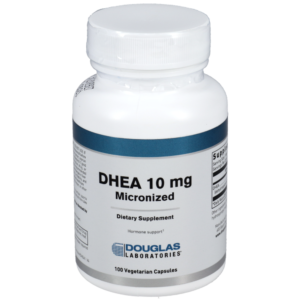
For some women, supporting testosterone production naturally starts with DHEA, a precursor hormone your body converts into testosterone (and other hormones) as needed. DHEA levels also decline with age, and supplementation may help support the body’s own hormone production for some women. As with any hormone-adjacent supplement, it’s worth having your levels checked and working with a practitioner to determine whether DHEA is appropriate for you, since more isn’t always better with hormone precursors.
One caveat worth mentioning: DHEA supplementation is generally most appropriate for women who are still menstruating. Postmenopausal women, or those without a menstrual cycle, convert DHEA differently, and supplementing without that context can sometimes push levels of other hormones in directions you don’t want. This is exactly the kind of thing worth reviewing with a practitioner before starting, rather than picking up DHEA off the shelf on your own.
Once you have your results in hand, you don’t have to sort through them alone. If your labs come back and you’re not sure what they mean, I’m happy to work alongside your practitioner to help interpret your results and, when appropriate, develop a compounded prescription tailored specifically to your levels and needs.
For women who are appropriate candidates, low-dose bioidentical testosterone therapy, compounded specifically for your needs, can help restore levels to a healthier range. This is not a one-size-fits-all approach. Dosing for women is a fraction of what’s used for men, and it should always be guided by careful evaluation and monitoring.
Testosterone and the Brain
There’s also a cognitive piece to this conversation. Testosterone receptors are present throughout the brain, including areas involved in memory and motivation, and testosterone appears to play a role in dopamine activity, the neurotransmitter tied to drive, focus, and reward. This may help explain why low testosterone often shows up not just as physical fatigue, but as that harder-to-name mental fog and lack of get-up-and-go. Research in this area is still developing, so I’d frame it as a promising piece of the puzzle rather than a settled explanation, but it’s one more reason testosterone deserves a seat at the table when we’re talking about cognitive vitality, not just physical.
The Bigger Picture
Testosterone doesn’t work in isolation. It’s part of an interconnected system with estrogen, progesterone, and cortisol. That’s why we always look at the whole picture rather than chasing a single number. If you’ve been feeling like something is off, tired, unmotivated, not quite yourself, and you haven’t had your testosterone evaluated, it may be worth the conversation.
Feeling well isn’t about ticking boxes on a lab report. It’s about function, vitality, and quality of life. If that’s something you’re missing, let’s talk about what your hormones might be telling you.
Warmly,
Bob Wood, RPh
|
|